
A different kind
of working edge.
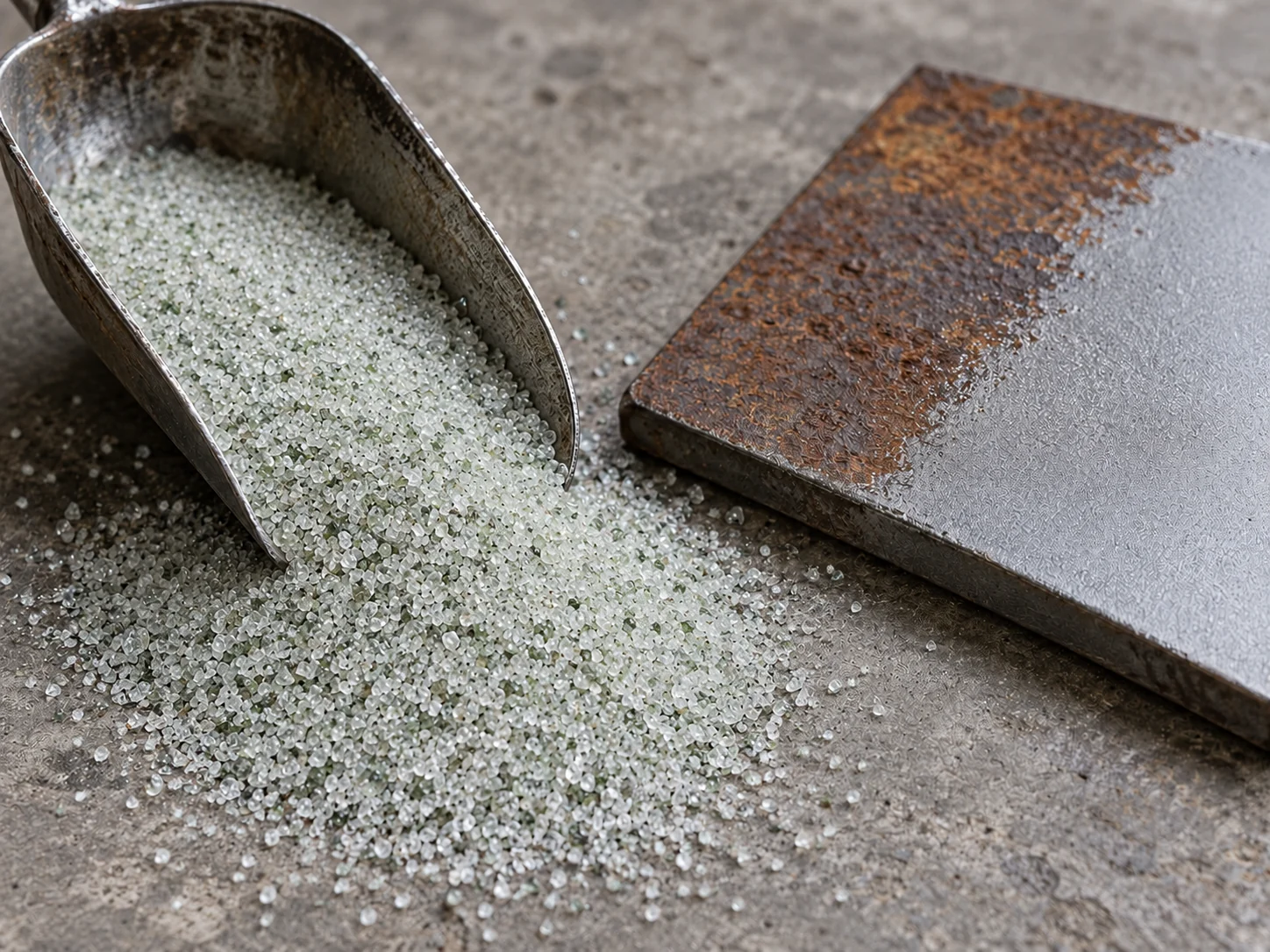
Blasting grit
Prepared crushed glass can be used as an abrasive in surface preparation. Its angular grains are different from manufactured spherical glass beads, and that distinction matters when selecting media for a job.
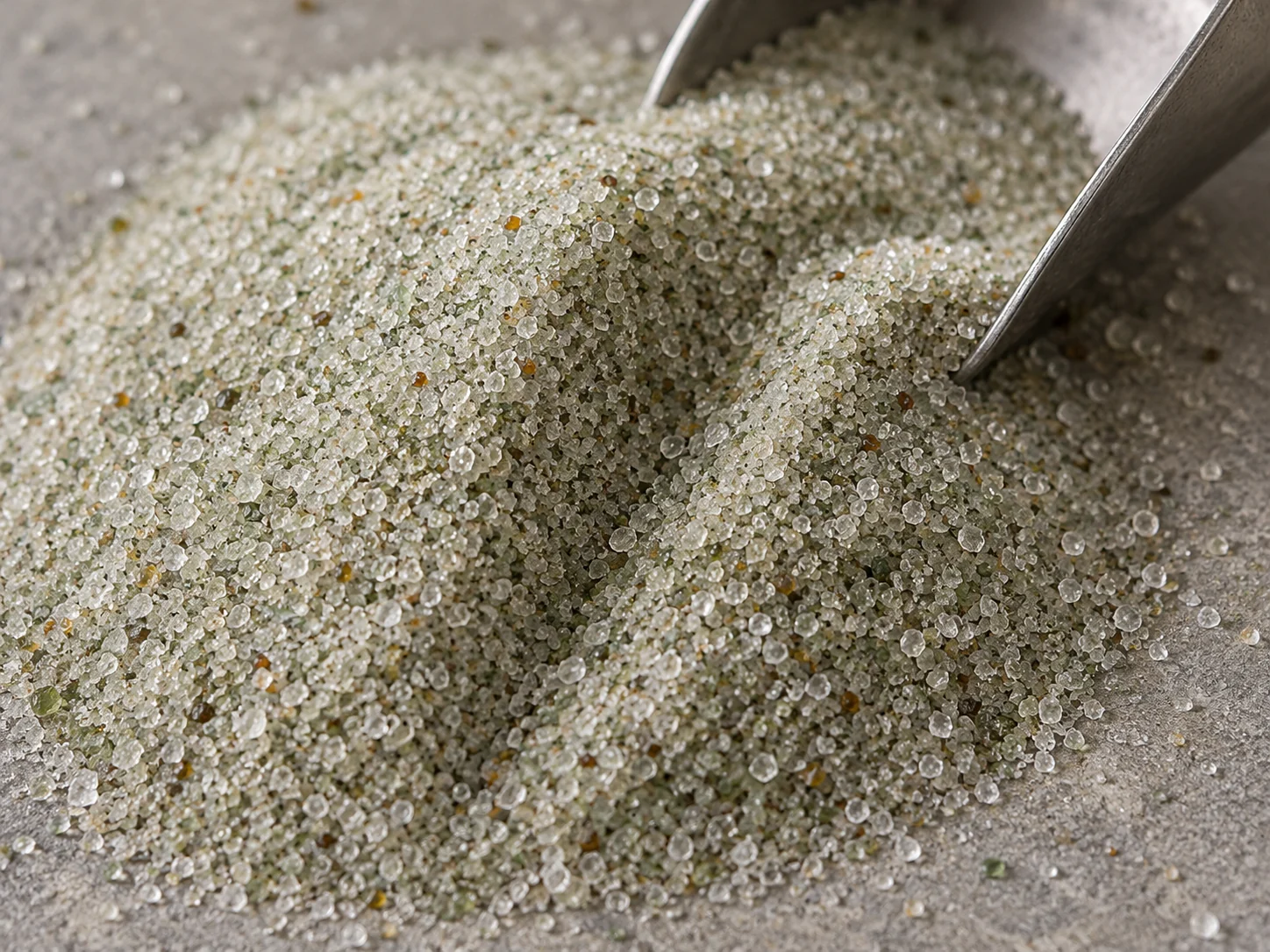
Match the media to the surface.
The required surface profile, coating system and underlying material guide abrasive selection. A media intended for one substrate may be unsuitable for another. Grain size, shape and cleanliness are practical specification questions, not simply visual preferences.
Control the fine material.
Abrasive production needs consistent grading and management of unwanted fines and contaminants. The blasting operation needs suitable equipment, dust controls and operating procedures. Recycled origin does not remove those requirements.
Test the result on the actual job.
Trials on a representative surface help establish the finish and operating conditions. Discuss the customer’s media specification before designing the glass-processing line, so that the output has a defined destination.
Good questions.
Useful answers.
Are crushed glass and glass beads the same?
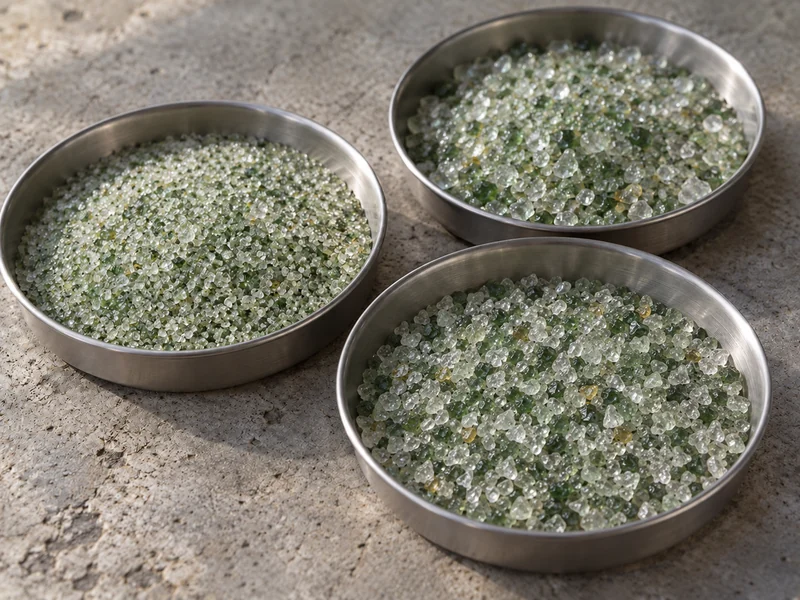
No. Crushed-glass grit is angular. Glass beads are manufactured to a spherical form and can produce a different surface effect.
Can any broken bottle be used straight away?
No. An abrasive product needs controlled preparation, grading and checks for contamination.
Keep exploring.
The material library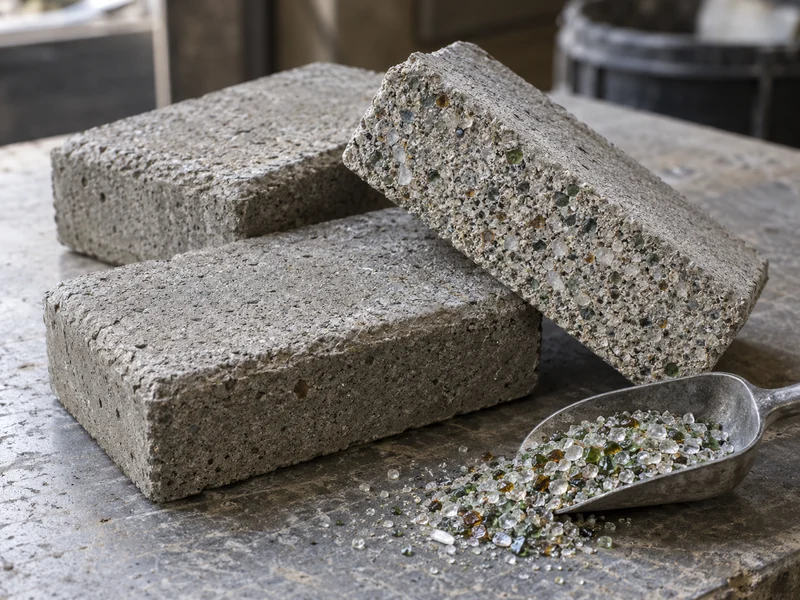
Have a use
in mind?
Tell us the material you have and the specification you need to achieve.